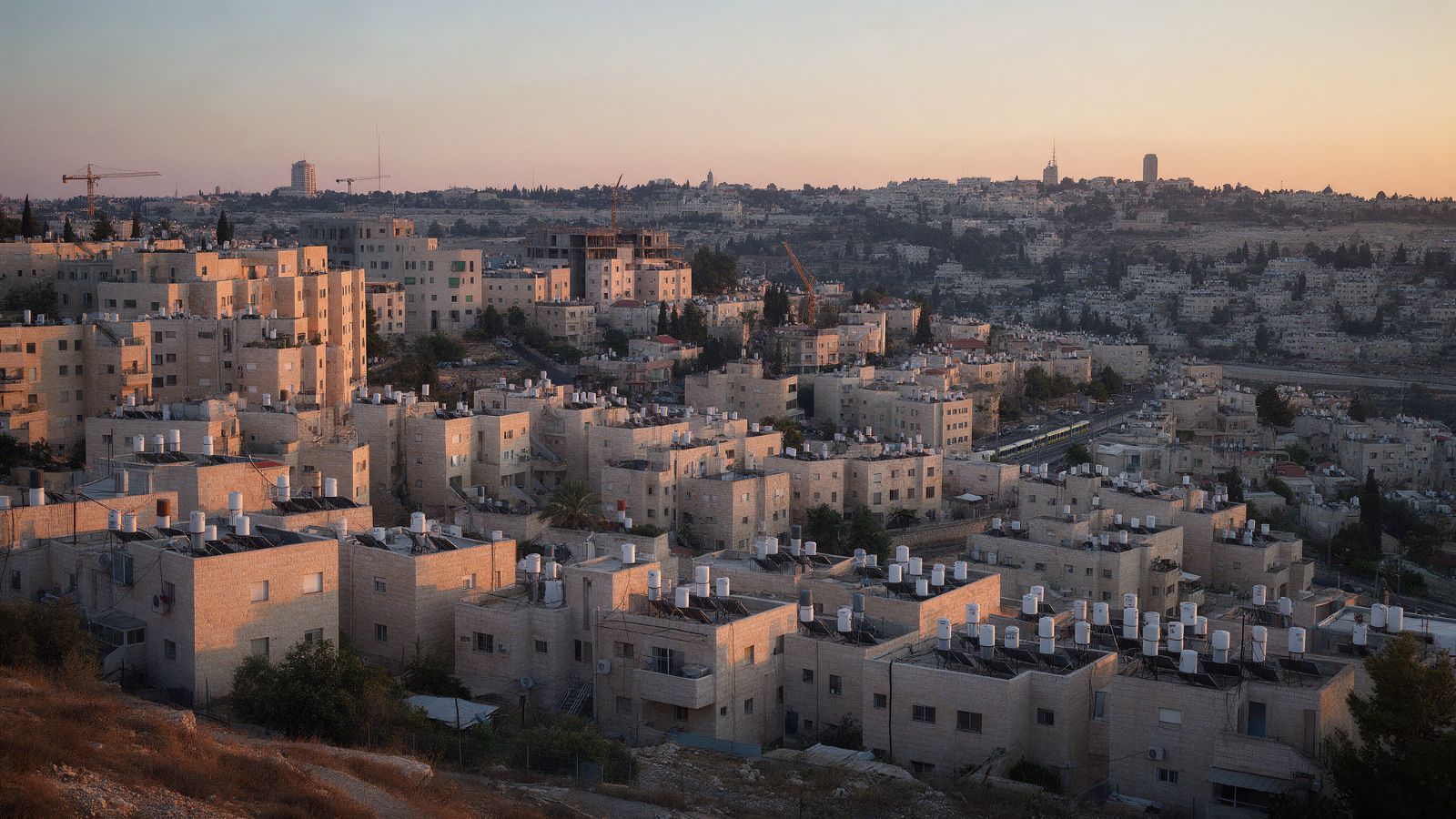
Buying an apartment in Jerusalem: prices by neighbourhood, new and resale, what you need to know
The largest Anglo community in Israel lives in Jerusalem, and it is also the country’s most contrasted market: from ₪60,000 per m² in Rehavia to ₪28,000 in the urban-renewal neighbourhoods. This guide gives real prices by neighbourhood, what is being built, and how to buy depending on whether you are a resident, a non-resident or a future oleh.
Jerusalem in four figures
₪3.1M average price per apartment (CBS, Q1 2026), about $860,000; ₪28,000 to ₪60,000 per m² depending on neighbourhood and condition; around 1 million residents, the country’s largest city; more than 30 urban-renewal projects under way. A market driven by local demand (large families, the religious population, students) and by foreign demand concentrated in about ten neighbourhoods.
Prices by neighbourhood (order of magnitude, 2026)
| Neighbourhood | ₪/m² resale | ₪/m² new | Profile |
|---|---|---|---|
| Rehavia, Talbieh | 50,000–60,000 | 65,000–85,000 | The historic, upscale centre; little new stock, the highest prices in the city. Many American and British second homes. |
| German Colony, Baka | 42,000–55,000 | 55,000–70,000 | Heart of the Anglo and French communities; Arab-era houses, renovated 1950s-70s buildings, Emek Refaim. |
| Old Katamon, Gonenim | 38,000–50,000 | 50,000–62,000 | Modern Orthodox families, Anglo synagogues; many pinui-binui projects in Gonenim. |
| Arnona, Talpiot | 32,000–42,000 | 42,000–55,000 | The biggest pool of new builds in the south; views, parking, mixed population, popular with young olim families. |
| Bayit VeGan, Givat Mordechai | 32,000–42,000 | 45,000–55,000 | Religious neighbourhood near Shaare Zedek hospital; large family apartments. Har Nof and Ramat Eshkol, the Anglo-haredi and Anglo-dati strongholds, sit in a comparable band. |
| Kiryat HaYovel, Kiryat Menahem | 26,000–34,000 | 38,000–48,000 | Massive urban renewal along the light rail; the city’s entry price. |
| Ramot, Pisgat Zeev, Neve Yaakov | 24,000–32,000 | 34,000–44,000 | Northern family neighbourhoods, accessible prices, 20-30 minutes from the centre; Ramot has a sizeable Anglo community. |
| Har Homa, Gilo | 26,000–33,000 | 34,000–42,000 | South, many new developments from the 2010s-2020s. |
In Israel the price per m² is quoted on gross area (walls included, often the balcony and a share of the common areas): a listing at 100 m² corresponds to 80-85 m² of usable space in the US or UK sense (about 860-915 sq ft; see gross vs net square meters). Always compare on equal gross area, and set Jerusalem against the other cities in Israel real estate prices city by city.
Where English speakers buy, and why
Three logics overlap. Community life first: English-speaking synagogues and schools in Baka, Old Katamon, the German Colony, Arnona, Ramat Eshkol and Har Nof, where a buyer from Teaneck, Hendon or Toronto finds neighbours, shops and rabbis who speak their language. The pied-à-terre next: a 2-3 room apartment in Rehavia, Talbieh or near Mamilla and the King David, used a few weeks a year around the holidays and rented the rest of the time, short-term where the building allows it. Investment last: new 3-4 room apartments in Arnona, Talpiot or Kiryat HaYovel, rented to families or students, with a gross yield of 3 to 3.5%. In the older neighbourhoods, the title (Church land, Minhal lease, undivided co-ownership) calls for a lawyer who knows the city: see real estate lawyer in Jerusalem.
For a buyer planning aliyah, the question is less the "ideal" neighbourhood than the one where they can settle for good: schools (including for children who do not yet speak Hebrew), transport to work, and a price compatible with 75% financing rather than 50%.
New builds and urban renewal
Jerusalem is short of land: new stock comes mainly from pinui-binui (demolition and rebuilding of 1950s-70s blocks, with the occupants rehoused) and TAMA 38 (adding floors and seismic reinforcement). The most active areas: Derech Hevron and Arnona in the south, Kiryat HaYovel and Kiryat Menahem in the west along the light rail, Gonenim, Ir Ganim, Neve Yaakov and Pisgat Zeev in the north. Add conventional developments in Malha, Har Homa and around the old railway station (Mekor Haim).
What changes for the off-plan buyer: a price per m² 10 to 20% below a "conventional" new build, but a delivery timeline of 3 to 6 years, dependent on the occupants’ consent and on permits. The off-plan contract is protected by the Sale Law (bank guarantee on every instalment), the balance is indexed to the construction cost index (madad tshumot habniya), and the schedule (often 15 to 20% at signing, the rest at delivery) leaves time to arrange a mortgage or to make aliyah. The full mechanism is in buying off-plan from a developer.
Developers’ advertised prices rarely include parking (₪120,000 to ₪250,000), the storage room, or the developer’s legal fees (capped by law at about ₪5,500 + VAT). Ask for the "all-in" price.
Buying in Jerusalem by status
Resident, only home
tax 0 → 5%- Financing up to 75%.
- On ₪3.5M: purchase tax ≈ ₪70,500.
- Loan up to ₪2,625,000, payment ≈ ₪15,000 over 25 years.
Non-resident
tax 8%- Financing 50% as a rule.
- On ₪3.5M: purchase tax ₪280,000.
- Cash required ≈ ₪2.1M including fees.
New immigrant (oleh)
tax ≈ 0.2%- Financing up to 75%.
- On ₪3.5M: purchase tax ≈ ₪7,600.
- Saving of ₪272,000 compared with a non-resident.
Breakdown by bracket
| Bracket | Rate | Tax |
|---|
Brackets of 16 January 2025, frozen until 15 January 2028 (Arrangements Law). A non-resident is taxed as an additional-home buyer unless they become an Israeli resident within two years of the purchase. Payment is due within 60 days of signing.
Full budget: a 4-room apartment in Baka
| Price | ₪4,200,000 |
| Purchase tax (8%) | ₪336,000 |
| Lawyer (0.5 to 1% + VAT) | ≈ ₪37,000 |
| Agency (2% + VAT) | ≈ ₪99,000 |
| Mortgage broker, appraisal, bank fees, insurance | ≈ ₪20,000 |
| Translations, power of attorney, apostille, wires | ≈ ₪6,000 |
| Total cost | ≈ ₪4,698,000 (+ 11.9%) |
| Mortgage at 50% | ₪2,100,000 → ≈ ₪11,900 / month over 25 years |
| Cash to plan for | ≈ ₪2,598,000 (≈ $720,000 / £565,000) |
Unlike a US closing, there is no title insurance, no escrow fee and no transfer tax beyond the purchase tax: the lawyer’s fee covers the title search and the registration at the Tabu.
Professionals on the ground
Jerusalem has the country’s highest density of English-speaking professionals: real estate lawyers trained in the US, UK or South Africa and admitted to the Israeli bar, mortgage brokers who specialise in non-resident files, agencies in Baka, Rehavia, Katamon and Ramat Eshkol, developers active in Arnona and on Derech Hevron. We select them on three criteria: real estate specialisation, independence from sellers, and experience with remote transactions. The city-specific checks (Church land, Minhal leases, old co-ownerships) and the fees are detailed in real estate lawyer in Jerusalem.
Frequently asked questions
What is the average price of an apartment in Jerusalem in 2026?
About 3.1 million shekels (≈ $860,000) according to the Central Bureau of Statistics (Q1 2026), all neighbourhoods and sizes combined. A resale 4-room apartment in a sought-after Anglo neighbourhood trades between ₪3.2M and ₪4.5M; the same in a new build, ₪4.5M to ₪6M.
Which neighbourhoods are most in demand among English speakers?
Rehavia, Talbieh, the German Colony, Baka, Old Katamon and Arnona concentrate most Anglo purchases, for the community life, the synagogues and the schools. Ramat Eshkol, Har Nof and Bayit VeGan draw the Anglo religious community. Kiryat HaYovel, Talpiot and Pisgat Zeev attract tighter budgets.
Are prices in Jerusalem still rising?
Over ten years, yes, strongly. Over 2025-2026 the market has stabilised: volumes fell and new-build prices are more negotiable, with developers offering 20/80 schedules and discounts. Well-located resale stock remains scarce and firm.
Is it better to buy new or resale in Jerusalem?
Resale offers the best locations and a price per m² that is 20 to 35% lower, but often without an elevator, parking or a safe room (mamad). New builds sit on the edge of the central neighbourhoods and in pinui-binui projects; they cost more but finance more flexibly and carry the Sale Law guarantees.
Are there pinui-binui projects worth looking at for a buyer?
Yes, several dozen projects are under way or approved (Derech Hevron, Kiryat HaYovel, Gonenim, Ir Ganim, Neve Yaakov). Buying a new apartment in a pinui-binui costs 10 to 20% less than a conventional new build of equal size, against a longer and less certain delivery date.
How we work
Every amount, bracket and rate on this page is checked against the official source listed at the bottom and dated. When a schedule or rate changes, the page is updated within days. Our methodology.
Sources
Your Jerusalem project, with the right people
Agency, developer, mortgage broker or lawyer: tell us the neighbourhood, budget and timeline, and we pass it to an English-speaking professional who works Jerusalem every day.