Real Estate Lawyer in Beit Shemesh: Fees, Local Checks, English Speakers
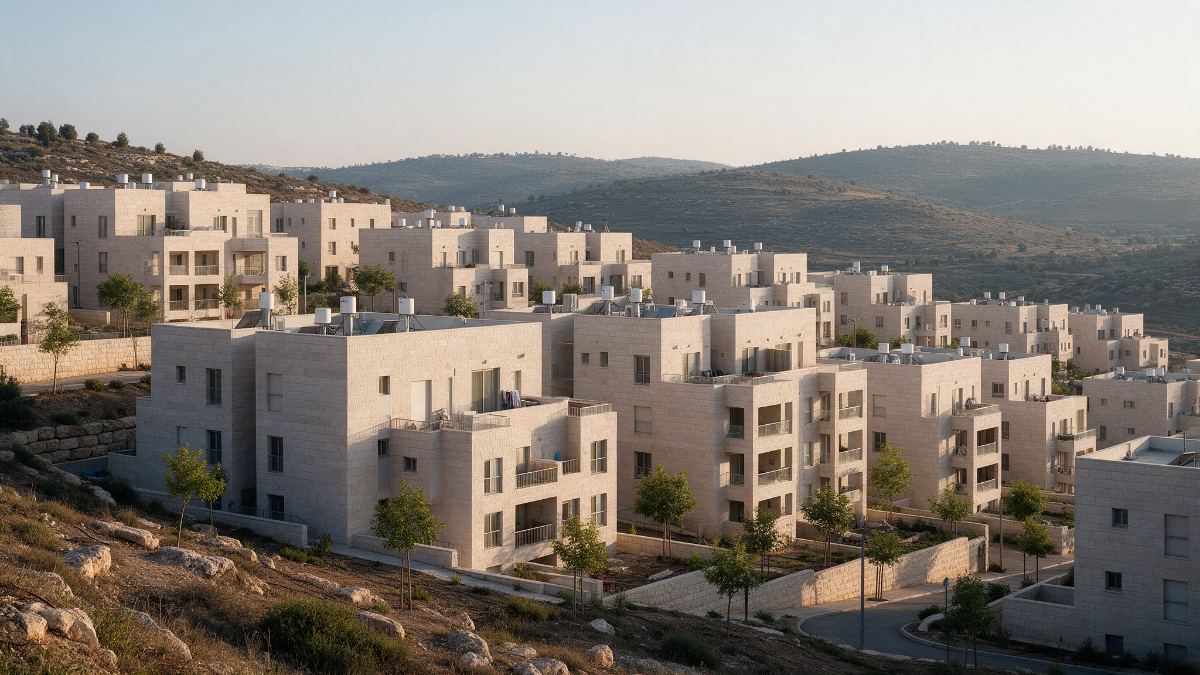
Beit Shemesh is one of the fastest-growing cities in Israel and one of the main destinations of North American olim: Ramat Beit Shemesh Aleph has English-speaking shuls, schools and agents on every street. It is also a city where most homes stand on state land, many buildings are not yet registered, new neighborhoods are delivered before their schools and roads, and a government-backed project can stall for years. Here is what a lawyer checks in Beit Shemesh, what they charge, and how to find one who is on your side.
The short answer
In Beit Shemesh, a real estate lawyer charges 0.5 to 1% + 18% VAT, which on a typical ₪2.3M four-room means ₪11,500 to ₪23,000 before VAT; on apartments of this size most lawyers quote a flat fee. What they check on top here: Israel Land Authority leases under most of Ramat Beit Shemesh, buildings whose condominium is not yet registered, delivery dates and Form 4 in neighborhoods built faster than their roads and schools, discounted-housing projects that can stall, split units, roof rooms and enclosed sukkah balconies without permit, urban renewal in the old city, and the large plans that will reshape the surroundings (BS/3000, Shchuna Vav). On ₪2.3M, purchase tax runs from ₪1,606 (oleh) to ₪184,000 (non-resident). Beit Shemesh has plenty of English-speaking lawyers; the question is whether yours works for the developer, the agency or you.
The figures to remember, November 2026
- Resale 4-room, city average (2025)
- ≈ ₪2.15M
- New 4-room, city average (2025)
- ≈ ₪2.29M
- Lawyer at 0.5–1% on ₪2.3M
- ₪11,500–₪23,000 + VAT
- Mas rechisha, non-resident, ₪2.3M
- ₪184,000
- Mas rechisha, resident, only home
- ≈ ₪11,244
- Population (CBS, 2024)
- ≈ 182,000
What the lawyer checks on top in Beit Shemesh
The base is the same everywhere: land registry extract, the seller’s mortgage, permits, debts, condominium documents, the seller’s tax position, described on the page the real estate lawyer’s role. Beit Shemesh adds eight topics, most of them tied to the speed at which the city has grown: more than 50% in a decade, to about 182,000 residents in 2024, with a further 66,000 homes in the BS/3000 policy document advanced by the Jerusalem District Committee in June 2026.
- Israel Land Authority leases. Ramat Beit Shemesh and the newer neighborhoods were built on State land marketed through Israel Land Authority (ILA, still often called the Minhal) tenders; in January 2026 alone, the ILA awarded about 600 units in Ramat Beit Shemesh Hey-2. The owner of such a home holds a long-term lease, usually capitalized (paid up front), and since 2011 the ILA has been converting capitalized urban leases into full ownership free of charge, in batches. The lawyer checks which situation you are in: ownership registered at the Tabu, a lease registered at the Tabu, or rights still recorded only at the ILA. They pull the rights confirmation (ishur zchuyot), checks that the lease is capitalized and what it allows, and plans for the ILA’s approval of the transfer, which takes longer than a plain Tabu registration. The differences are explained on Tabu, Minhal or housing company.
- Buildings not yet registered. In Dalet, Neve Shamir, Hey and Ramat Avraham, many buildings delivered in recent years are not yet registered as a condominium. A resale is then a transfer of rights at the developer and the ILA. The lawyer gets the developer’s confirmation that the seller has paid in full and owns what is being sold (including the parking and the storage room), checks the caveats registered in the bank’s favor, and makes sure the developer will sign the transfer.
- Delivery dates and Form 4. Neighborhoods here are often occupied before their schools, roads and shops are ready; the municipality itself has stressed that public infrastructure must keep pace with construction, and one recent neighborhood still has a single access road. The occupancy certificate (Form 4) depends on connections to water, power and roads, which can delay delivery even when the building is finished. On an off-plan contract the lawyer negotiates a realistic contractual date, a precise definition of delivery, and checks the delay compensation the Sale Law guarantees: nothing for the first month, then 100% of a comparable rent for months 2–4, 125% for months 5–10, 150% from month 11. Developers have pleaded the war and the labor shortage as force majeure; in August 2025 the High Court refused to impose a blanket solution, leaving it to the courts case by case.
- Discounted-housing projects that stall. Beit Shemesh has many Dira BeHanacha projects. In May 2026 the Housing Ministry cancelled the development contracts of an 836-unit “plan and build” project in Ramat Beit Shemesh Dalet: 492 winning families, who had been waiting since 2022, still had no purchase contract and no delivery date, and in 2025 some open-market buyers nearby had been asked to cancel or move to another unit. The lesson for any buyer: until you have signed a contract and pay against a Sale Law guarantee, you are not protected. For a non-resident, these programs are closed anyway (they are reserved for eligible Israeli residents), but the open-market units of the same projects are not, and the lawyer checks the project’s status and the guarantee before anything is paid.
- Split units, roof rooms and sukkah balconies. Large families shape the buildings: apartments divided into two units, roof rooms and extensions, sukkah balconies enclosed into rooms, storage turned into living space. Some are permitted, many are not. The lawyer compares the building file with the property: an unpermitted unit is not rentable income you can count on, the bank values only the permitted area, and the municipality can order demolition.
- The off-plan contract itself. New-build is the bulk of the market in Hey, Neve Shamir, Ramat Avraham and the coming Shchuna Vav. The lawyer marks up the developer’s contract: Sale Law guarantee for each payment, indexation (the 20% paid at signing is never indexed, at most half of each later payment and 40% of the price in total, and indexation stops at the contractual delivery date), parking and storage, the technical specification (mifrat techni). Developer financing offers are also capped: until the end of 2026, Bank of Israel rules limit balloon and developer-subsidized loans to 10% of each bank’s mortgages. The clause-by-clause detail is on buying off-plan from a developer.
- Urban renewal in the old city. Old Beit Shemesh has a pinui-binui pipeline of several thousand units. One project of 542 homes in three 26-storey towers sold 64 apartments in 2024 to a group of buyers from New York and New Jersey at about ₪23,200/m² including VAT, while its building permits were still being obtained. Buying at that stage is possible but needs the lawyer to check the permit status, the guarantee you receive, and the delivery date the contract really commits to. The mechanics are on pinui-binui and TAMA 38.
- The plans around you. BS/3000 allows buildings of up to 23 storeys on some plots of the southern center and up to 9 storeys along several main roads; Shchuna Vav 1 adds about 2,650 homes in the east; a plan for about 4,200 more units around Ramat Avraham was recommended for deposit in May 2026. The lawyer looks up the plans on the mavat and iplan portals: a tower planned across the road changes the view, the traffic and sometimes the betterment levy on your own plot.
The local committee and the municipality: what the lawyer pulls
Beit Shemesh has its own local planning and building committee, which issues permits and recommends plans to the Jerusalem District Committee. Alongside the Tabu and the ILA, the lawyer works with four municipal checks.
| Document or check | Where | Why it matters in Beit Shemesh |
|---|---|---|
| Building file and approved plans | Municipal engineering department | Split units, roof rooms, enclosed balconies; what the bank will value. |
| Plans in force and in preparation | Mavat / iplan, local committee | BS/3000, Shchuna Vav, Ramat Avraham expansion, urban renewal compounds. |
| Betterment levy (heitel hashbacha) | Local committee assessment | 50% of the value created by a plan; due on sale or on a permit that uses new rights. |
| Arnona and water debts, municipal certificate for the Tabu | Municipality | Debts must be cleared before your rights can be registered. |
| Rights confirmation | Israel Land Authority (Jerusalem district), developer | Lease or ownership, capitalized or not, what is recorded in the seller’s name. |
Fees in Beit Shemesh
| Property | Price | Fee | Note |
|---|---|---|---|
| 3 rooms, resale, old city or Bet | ₪1.8M | Flat ₪7,000–11,000 | ILA transfer; permits to compare. |
| 4 rooms, resale, Ramat Beit Shemesh Aleph | ₪2.5M | Flat ₪10,000–16,000 | Lease or ownership to confirm; extensions. |
| 4 rooms, resale, building not yet registered (Dalet, Neve Shamir) | ₪2.3M | Flat ₪10,000–15,000 | Transfer at the developer and the ILA. |
| 4 rooms off-plan, Hey or Neve Shamir | ₪2.4M | Flat ₪9,000–15,000 | + developer’s lawyer capped ≈ ₪5,900 + VAT, who does not represent you. |
| 5–6 rooms or cottage, Sheinfeld, Mishkafayim, Gimmel | ₪4–6.5M | ₪18,000–35,000 (≈ 0.45–0.55%) | Permit file, garden and parking attachments. |
| Power of attorney and remote purchase | — | + ₪1,500–4,000 | Consulate or notary and apostille, translations. |
Prices in Beit Shemesh are lower than in the Sharon or Jerusalem, so a percentage fee looks small; the work, on an ILA transfer or an unregistered building, is not. A flat fee with a clear scope is the norm. The selection criteria are on how to choose your real estate lawyer, and the full budget (agency 2% + VAT, broker, appraisal) on closing costs in Israel.
Purchase tax on ₪2.3M: resident, non-resident, oleh
| Resident, only home (0% up to ₪1,978,745, then 3.5%) | ₪11,244 |
| Non-resident or additional home (8%) | ₪184,000 |
| New oleh, only home (0% then 0.5%) | ₪1,606 |
| Gap non-resident / resident | ₪172,756 |
| Gap non-resident / oleh | ₪182,394 |
At Beit Shemesh prices, a resident or an oleh buying an only home pays almost no purchase tax, while a non-resident pays 8% from the first shekel. Families who plan aliyah within a year or two often time the signing accordingly; a non-resident who becomes a resident within two years can ask to be reclassified as “only home”. Worked cases are on mas rechisha 2026, the oleh file on buying as a new immigrant, and your own price on the calculator.
Neighborhoods and typical files
| Neighborhood | What people buy | The lawyer’s point of attention |
|---|---|---|
| Ramat Beit Shemesh Aleph | The original Anglo hub, mixed religious, ≈ ₪2.2–3.9M | ILA lease or ownership; extensions and roof rooms. |
| Ramat Beit Shemesh Bet | Mainly Haredi and Hasidic, ≈ ₪2.0–2.8M | Split units, enclosed balconies, permits. |
| Ramat Beit Shemesh Gimmel | Young families, cottages, some Anglo areas, ≈ ₪2.35–2.6M for apartments | Cottage extensions, attachments. |
| Ramat Beit Shemesh Dalet | Newer buildings, ≈ ₪2.1–2.8M | Unregistered buildings, stalled discounted projects. |
| Neve Shamir, Hey | The newest districts, ≈ ₪2.4–3.65M | Off-plan contracts, delivery dates, Form 4, ILA transfers. |
| Mishkafayim | Larger units next to Aleph, ≈ ₪3.8–6.6M | Premium prices: permits and attachments justify them or not. |
| Old Beit Shemesh, Sheinfeld | Older stock, villas, urban renewal compounds | Pinui-binui agreements, permit status of presales. |
Neighborhood character matters in Beit Shemesh more than almost anywhere: the same four-room can suit one community and not another, which affects resale. The full guide is on the page buying property in Beit Shemesh; for Jerusalem, thirty minutes away, see real estate lawyer in Jerusalem and buying in Jerusalem.
Finding an independent English-speaking lawyer for Beit Shemesh
Beit Shemesh draws a remarkable share of North American olim for its size: of the 260 olim who settled there between January and July 2025, 160 came from North America. English-speaking lawyers, many of them olim themselves, work in Ramat Beit Shemesh and in Jerusalem, and handle a large share of the city’s Anglo files. As everywhere, the issue is independence: in a city where much of the supply is new-build, the lawyer you meet first is often the developer’s.
Confirm on the Israel Bar Association register that the lawyer is admitted in Israel, then ask:
- Do you act for the developer, the agency or the seller in this project? The developer’s lawyer, whose fee you pay up to a legal cap, represents the developer.
- How many ILA transfers and unregistered-building resales have you done in Beit Shemesh this year?
- Will you check the delivery date against the project’s real progress and the infrastructure around it?
- Will you compare the building file with the apartment before I sign? Especially for a split unit or an enclosed balcony.
- Is your fee flat, and what is billed separately? ILA fees, power of attorney, translations.
- Can you report in English within 48 hours?
Red flags: a lawyer introduced by the developer’s sales office as “everyone’s lawyer”; a delivery date nobody can explain; a request to pay before the Sale Law guarantee is issued; “it’s on the Minhal, there’s nothing to check”; a zikaron dvarim pushed for signature before the rights are confirmed. The full checklist is on how to choose your real estate lawyer, signing from abroad on power of attorney and remote purchase, and the American buyer’s side (dollar transfers, US tax) on buying from the USA and on our sister site Shekel Guide.
Frequently asked questions
How much does a real estate lawyer cost in Beit Shemesh?
The usual 0.5 to 1% of the price + 18% VAT, which on a ₪2.3M four-room gives ₪11,500 to ₪23,000 before VAT. On apartments under ₪2.5M, most lawyers quote a flat fee, typically around ₪9,000 to ₪16,000 before VAT, and charge more for a large house or a file with an Israel Land Authority complication. These are indicative ranges: ask for a written engagement letter that lists what is included (checks, contract, caveat, tax filing, registration).
Most of Ramat Beit Shemesh is on Israel Land Authority land. Is that a problem?
No, it is the norm in new Israeli neighborhoods, and banks lend on it every day. You buy a long-term lease from the State, usually capitalized (paid up front), or, increasingly, full ownership after the Authority converts the lease. What it changes: the transfer is approved by the Israel Land Authority, sometimes after the developer, rather than recorded directly at the Tabu; building additions may need its consent; and timelines are longer. The lawyer pulls the rights confirmation and tells you exactly what you are buying.
My off-plan apartment in Beit Shemesh is late. What am I entitled to?
Under the Sale Law as amended in 2022, nothing for the first month of delay, then compensation equal to 100% of the rent of a comparable apartment for months 2 to 4, 125% for months 5 to 10, and 150% from month 11, unless the developer proves the delay was caused by circumstances beyond its control. Developers have invoked the war and the labor shortage; in August 2025 the High Court declined to order a blanket solution, so the question is decided case by case. Your lawyer should have negotiated a realistic delivery date and a clear definition of “delivery” before you signed.
Can a non-resident buy a Dira BeHanacha apartment in Beit Shemesh?
No. The discounted-housing programs (Dira BeHanacha, including Mechir Matara) are for eligible Israeli residents without a home, and winners cannot resell for five years from the Form 4 or seven years from the lottery, whichever comes first. A non-resident can buy the open-market units in the same projects, at market price, with the same Sale Law protection as any off-plan buyer.
What purchase tax will I pay on a ₪2.3M apartment in Beit Shemesh?
A resident buying their only home pays about ₪11,200; a non-resident or a buyer of an additional home pays ₪184,000 (8%); a new oleh buying an only home pays about ₪1,600. A non-resident who moves to Israel within two years can ask to be reclassified as “only home” and recover the difference. The lawyer files the declaration within 30 days.
How we work
Every amount, bracket and rate on this page is checked against the official source listed at the bottom and dated. When a schedule or rate changes, the page is updated within days. Our methodology.
Sources
- Merkaz HaNadlan – Beit Shemesh neighborhood index: population 181,986 (2024), average prices of new and resale apartments, units planned by neighborhood (July 2026)
- Bizportal – Israel Land Authority tenders in Ramat Beit Shemesh Hey-2: about 600 units awarded (January 2026)
- Bizportal – discounted-housing project of 836 units in Ramat Beit Shemesh Dalet: Housing Ministry cancels the contracts, 492 families waiting since 2022 (June 2026)
- Bizportal – Beit Shemesh: about 185,000 residents, average prices by size, Shchuna Vav 1 plan (2,653 units), urban renewal pipeline (November 2025)
- Immobilier.co.il – policy document BS/3000 advanced by the Jerusalem District Committee on 23 June 2026: 66,000 new units
- Globes – US Jewish community buys 64 apartments in a Beit Shemesh urban renewal project, ₪23,200/m² incl. VAT (September 2024)
- Easy Aliyah – Ramat Beit Shemesh property market report, price ranges by neighborhood (Q1 2025 data)
- Ynetnews – where new immigrants settled, January–July 2025 (Aliyah and Integration Ministry data): Beit Shemesh 260 olim, 160 from North America
- Calcalist – High Court declines to order relief on delivery delays; war as force majeure decided case by case (August 2025)
- Merkaz HaNadlan – Israel Land Authority converts capitalized urban leases into full ownership free of charge
- Kol Zchut – Dira BeHanacha: eligibility, resale restriction (5 years from Form 4 or 7 years from the lottery)
- Globes – Bank of Israel mortgage rules, developer balloon and subsidized loans capped at 10% of a bank’s mortgages until the end of 2026 (February 2026)
- Israel Tax Authority – 2026 mas rechisha brackets
- Israel Land Authority – leases, transfers of rights and ownership
- Israel Bar Association – register of lawyers
An English-speaking real estate lawyer for Beit Shemesh
Real estate specialists admitted to the Israeli bar, independent of Beit Shemesh developers and agencies, used to Israel Land Authority transfers, unregistered buildings, off-plan delays and buyers who are still in the US, the UK or Canada. Tell us the neighborhood, the type of property (resale, off-plan, urban renewal) and your status.