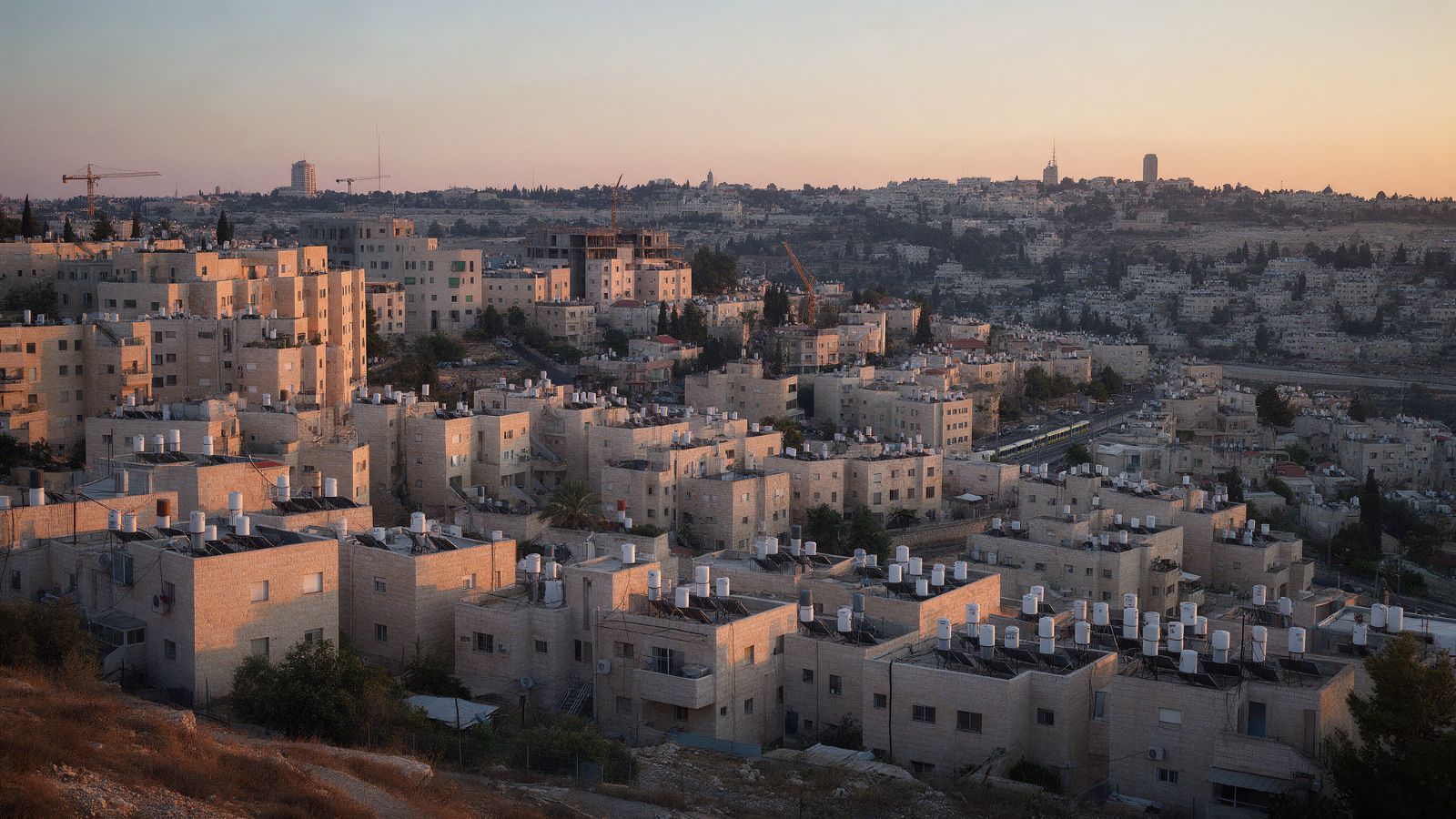
New Developments in Jerusalem: Where the City Is Building, New-Build Prices, What to Check
Jerusalem is building at a pace it has never seen: about 8,000 homes permitted a year since 2021, against 2,300 before 2019, and more than 10,000 unsold new apartments sitting with developers. But almost all of that supply comes from urban renewal along the light rail lines, on timelines measured in years. Here is where the sites are, what new builds cost neighbourhood by neighbourhood, how to read a 20/80 payment plan under the 2025–2026 rules, and what to check on a specific project before you sign.
The short answer
New construction in Jerusalem is concentrated in the south (Arnona, Talpiot), the west along the light rail (Kiryat HaYovel, Malha), Katamon-Gonenim, downtown and the outer neighbourhoods. New builds trade at ₪34,000 to more than ₪85,000 per m², typically 15–30% above nearby resales, in a buyer’s market: 10,097 unsold new homes at the end of July 2026. 20/80 plans still exist, restricted by the Bank of Israel until the end of 2026. TAMA 38 expired on 18 May 2026 with no replacement in Jerusalem, so new stock will come from pinui-binui. Before signing: a permit actually issued, the Sale Law guarantee, a written delivery date, the technical specification, and the nature of the land.
Key figures, November 2026
- Homes permitted per year (2021–2024)
- ≈ 8,000
- Unsold new homes (end-July 2026)
- 10,097
- New build, observed ₪ per gross m²
- 34,000–85,000+
- Typical new vs resale premium
- +15 to 30%
- Developer balloon loans, cap per bank
- 10% to end-2026
- Pinui-binui units approved in 2025
- 15,240
Where Jerusalem is building: the five areas
Jerusalem has almost no greenfield land left, so the city densifies what exists, first along the light rail lines. The pace has changed scale: about 2,300 homes permitted a year up to 2019, then about 8,000 a year from 2021 to 2024 (municipality, quoted by Ynet), and first place nationally for housing starts in July 2024 – June 2025, with 6,600 units (CBS). One quirk weighs on timelines: the local planning committee lacks the independent powers of Tel Aviv’s or Netanya’s, so the district committee keeps control of most large plans.
| Area | What is being built | Public plans and figures | Deliveries |
|---|---|---|---|
| South: Arnona, Talpiot, Derech Hevron | Urban renewal towers on Derech Hevron and Shlom Yehuda Street, eight-storey buildings in Arnona, housing in the former Talpiot industrial zone | Arnona plan ≈ 1,830 units; Talpiot master plan ≈ 8,500 units by 2040; in Talpiot, ≈ 1,950 new units replacing 418 in demolition-permit applications | Units sold in 2026 delivered towards the end of the decade |
| West, along the light rail: Kiryat HaYovel, Kiryat Menahem, Malha, Givat Shaul | Pinui-binui of 1950s–60s housing estates, towers near stations | Green Line opened in August 2026 between downtown and Malha; ≈ 340 new units replacing 81 in Kiryat Menahem; mixed-use project on the old Givat Shaul flour mill site (≈ 300 homes) | 3 to 6 years depending on permit stage |
| Katamon, Gonenim (Katamonim) | Demolition and rebuilding of the Katamonim blocks, small boutique projects at the edge of Old Katamon | ≈ 1,400 new units replacing 347 in demolition-permit applications | 3 to 6 years |
| Downtown and the city entrance | Luxury residences (Jaffa Road, Mamilla, the former Shaare Zedek hospital site), office and residential towers near Navon station | City-entrance business district (Shaar HaIr); the area where foreign residents do most of their buying | Projects being delivered now and 2027–2030 programmes |
| Outer neighbourhoods: Ramot, Pisgat Zeev, Neve Yaakov, Gilo, Har Homa, Givat HaMatos | Urban renewal (Gilo, Neve Yaakov), new neighbourhoods on state land | Givat HaMatos: more than 2,500 homes planned, eventually served by the Blue Line; tower projects in Gilo | Staggered into the early 2030s |
Two things are redrawing the map. The light rail: since August 2026 the Green Line has linked downtown with Malha via the central station and Givat Ram (Gilo next, Mount Scopus in 2027); the Blue Line, under construction since September 2025, opens in stages between 2029 and 2031. The largest building rights sit along these corridors. Unit size: the municipality restrains small investor apartments and favours four rooms and up; in 2025, 4-room starts rose about 50% while 1–2 room starts fell 30%. The new two-room pied-à-terre is getting scarce.
Several outer neighbourhoods (Ramot, Pisgat Zeev, Neve Yaakov, Ramat Shlomo, Gilo, Har Homa, Givat HaMatos) lie beyond the 1967 line. Israeli sale law and the Sale Law guarantee apply there as elsewhere, and banks lend normally; their status is disputed internationally, a factor some buyers living abroad weigh in their decision.
New vs resale prices, neighbourhood by neighbourhood
Prices are per gross m² and, for new builds, include 18% VAT (a resale by a private seller carries none, so part of the gap is tax). The ranges match our Jerusalem city guide.
| Neighbourhood | Resale | New | What new supply looks like |
|---|---|---|---|
| Rechavia, Talbieh, downtown | 50,000–60,000 | 65,000–85,000+ | Few projects, mostly luxury residences; downtown luxury deals run from ₪50,000 to over ₪90,000/m², around ₪65,000 on average (Globes, 2025). |
| German Colony, Baka | 42,000–55,000 | 55,000–70,000 | Small boutique buildings, conservation constraints; few units, quickly sold. |
| Old Katamon, Gonenim | 38,000–50,000 | 50,000–62,000 | Katamonim pinui-binui, boutique projects on the edge of Old Katamon. |
| Arnona, Talpiot | 32,000–42,000 | 42,000–55,000 | The south’s biggest pipeline: towers, views, parking; some off-plan sales close below ₪40,000/m². |
| Bayit VeGan, Givat Mordechai | 32,000–42,000 | 45,000–55,000 | Large family apartments, religious and Anglo demand. |
| Kiryat HaYovel, Kiryat Menahem | 26,000–34,000 | 38,000–48,000 | Urban renewal along the light rail; the entry price for new builds in the city proper. |
| Ramot, Pisgat Zeev, Neve Yaakov | 24,000–32,000 | 34,000–44,000 | Northern family neighbourhoods, renewal projects and new phases. |
| Har Homa, Gilo | 26,000–33,000 | 34,000–42,000 | 2010s–2020s developments and tower projects in Gilo. |
A real-world example gives the scale. In Arnona, on March–July 2026 transactions compiled by Bizportal, a new 4-room unit in an urban renewal project sells for around ₪4.25M, against ₪3.65M for a resale 4-room in the neighbourhood (+16%); a 5-room, ₪5.5M against ₪4.22M (+30%). A 118 m², 4.5-room unit on the 12th floor sold for about ₪4.33M in June 2026 (≈ ₪36,700/m²), delivery towards the end of the decade. In return, a new build brings a mamad, lift, parking and storage, often missing in older Rechavia or Nachlaot buildings: see new or resale and gross vs net area.
A buyer’s market: more than 10,000 unsold homes
In 2025 Jerusalem became the city where developers hold the most unsold new stock: 10,234 apartments at the end of 2025, ahead of Tel Aviv (9,709), then 10,097 at the end of July 2026 (CBS, via Globes). Between May and July 2026, only 475 new homes sold in Jerusalem, against 1,157 in Tel Aviv, and new builds made up just a third of the city’s transactions. At that pace the stock represents several years of sales (our calculation: in the order of five), while Tel Aviv is at about two.
Buyers therefore have negotiating power they lacked in 2021–2022. Developers avoid official list-price cuts and offer consumer-club discounts, free parking or indexation waivers instead. Three requests often succeed in 2026: a stated discount on the contract price, capped indexation, parking included. The national backdrop (Bank of Israel rate 3.25%, prime 4.75%) is in prices city by city.
20/80 and 10/90 plans, and the Bank of Israel rules
In 2024, deferred-payment offers exploded: the Bank of Israel estimated they were used in half of new-home purchases, against 20% before the war, and that balloon loans (repaid in one go at delivery, with the developer paying the interest) reached 23% of new mortgages at the end of 2024. In March 2025, the Supervisor of Banks responded with a temporary directive, in force until the end of 2026:
- Developer-subsidised balloon loans: capped at 10% of the mortgages each bank grants over the period.
- Project finance: where a large share of a project’s sales (at least 25%) carry deferral of at least 40% of the price, the bank financing construction must risk-weight that credit at 150% instead of 100%, which makes it dearer.
- General rules tightened in February 2026: a 30-year maximum term with no exceptions, at least one third of the loan at a fixed rate, repayments capped at 50% of disposable income.
20/80 is not banned, but it costs the developer more, so it is rationed. For the foreign buyer or future oleh who wants to pay 20% at signing and the rest at delivery (time to sell a home in New York or London, or to make aliyah), the question stays the same: what is the final price if the construction index runs at 3% a year? Since Amendment 9 (contracts signed from 7 July 2022), the 20% paid at signing is never indexed, at most half of each later payment is (40% of the price at most), and indexation stops at the contractual delivery date. Over three years that is 3–4% of the price (example below). To our knowledge the directive had not been extended beyond the end of 2026 as of 7 November 2026: check before signing in 2027. The guarantee and delay compensation (nothing in the first month, then 100% of comparable rent for months 2–4, 125% for months 5–10, 150% after that): see buying off-plan from a developer.
Pinui-binui and the end of TAMA 38: what changes in Jerusalem
Jerusalem holds about a third of all housing units in urban renewal planning nationwide, some 50,000 potential homes (Urban Renewal Authority). The pace is picking up: 54 pinui-binui plans approved in 2025 (a record 61 in 2024), covering 15,240 homes, and 4,092 homes granted permits in 2025, against 1,378 in 2023. The estates of Kiryat HaYovel, Kiryat Menahem, Gonenim, Ir Ganim, Talpiot and Gilo are being replaced with buildings three to five times denser, and the municipality often waives the betterment levy to move projects forward.
TAMA 38, the national earthquake-retrofit plan that let developers add floors to, or rebuild, a pre-1980 building, expired for good on 18 May 2026. Jerusalem has no approved replacement plan, and the Planning Administration said in May 2026 that work on one was not advancing. What remains is the so-called “Shaked” track (Amendment 139 to the Planning Law), which lets the local committee approve a detailed plan and the permit in parallel; when TAMA 38 expired, not a single permit had yet been issued under it nationwide. For buyers, that means an old building “with a signed TAMA 38 project” but no permit application filed before 18 May 2026 has lost its legal basis, and tomorrow’s new stock will come from block-scale pinui-binui.
- Buying a new unit from the developer of a pinui-binui project (the units sold on top of those returned to the rehoused owners): an ordinary off-plan purchase, protected by the Sale Law, usually 10–20% cheaper than a conventional new build in the same neighbourhood. The risk is time: 3 to 6 years depending on the permit stage.
- Buying an old apartment in a block slated for renewal: you are buying an apartment plus a future right, worth whatever the real stage is (owners’ consent, approved plan, permit, bank financing). Six to twelve years from consent to keys is not unusual. The detail is in pinui-binui and TAMA 38.
Dira BeHanacha and Mechir Matara: who qualifies
The state’s Dira BeHanacha (“discounted apartment”) programme, whose main track is Mechir Matara (“target price”), allocates new homes by lottery below market price: in recent tenders the discount reaches 25% of market value, capped per unit (in the order of half a million shekels, under Israel Land Council decisions). Jerusalem features irregularly, mostly with projects in outer neighbourhoods; open projects are listed on the Ministry of Construction and Housing site.
- Eligibility: Israeli citizens (including those married to a foreign national) who have not owned a home, or more than a third of one, for three years; couples, families with a child under 21, singles from age 35; an eligibility certificate is required; priority quotas for reservists, people with disabilities and local residents.
- Excluded: foreign nationals and non-residents. An American, British or South African buyer without Israeli citizenship cannot take part; a new oleh, a citizen from arrival, can register if the other conditions are met (whether a home owned abroad counts must be checked case by case).
- Restrictions: no resale for 5 years after the occupancy certificate (tofes 4) or 7 years after the lottery, whichever comes first; renting out is allowed.
- Financing: since February 2026, banks may lend 75% on a discounted-price home up to a value of ₪2.1M (a loan of ₪1.575M at most), with at least ₪100,000 of equity.
The eleventh lottery (July 2026) covered 7,922 homes in 19 localities; at the end of October 2026 the next had no date. For buyers abroad, it is an option after aliyah, not before.
What to check on a specific Jerusalem project
The general checklist (guarantee, specification, penalties, warranty period) is in the off-plan guide and in the risks of buying off-plan. In Jerusalem, seven points need particular care.
- Permit stage. “Plan approved”, “permit in progress” and “permit issued” (heter bniya) are worth very different things. With a dominant district committee and frequent objections, the gap between an approved plan and breaking ground runs to years. Check the plan number on mavat / iplan, and the permit on the municipality’s engineering site.
- The Sale Law guarantee and the project account. Ask which bank is accompanying the project (liyvi bankai), for the voucher book, and for a copy of a guarantee already issued. Never pay outside that channel, including for extras and changes.
- The delivery date. It must be a date, not “the quarter of”. It triggers delay compensation and stops indexation. On a pinui-binui where demolition has not started, insist on a realistic date and an exit clause if the permit slips.
- The land. Many post-1948 neighbourhoods sit on Israel Land Authority (Minhal) or JNF land: you receive a leasehold right, and final registration takes longer. Downtown, some plots belong to churches (see church land). Your lawyer checks it on the Tabu extract.
- The specification. The mandatory Jerusalem-stone façade says nothing about the interior: read the mamad and balcony areas (often a sukkah balcony), air conditioning, windows.
- Parking. Rarely in the advertised price: ₪120,000–250,000 per space sold separately, with its number in the contract.
- The future neighbourhood. The tower planned opposite or light rail works are not covered by the contract: your lawyer reviews the plans filed around the project.
The city-specific legal checks (church land, Israel Land Authority, complex condominiums) and fees are covered in real estate lawyer in Jerusalem.
Buying new in Jerusalem by status
Purchase tax (mas rechisha) is due within 60 days of signing an off-plan contract, even if delivery is three years away. On a new 4-room apartment at 4,250,000 ₪:
Resident, only home
108,038 ₪- 0% up to ₪1,978,745, then 3.5% and 5%.
- Financing up to 75% of the price.
Non-resident or investor
340,000 ₪- 8% from the first shekel.
- Financing usually capped at 50%.
New oleh
11,356 ₪- 0.5% above ₪1,978,745, until 15 January 2028.
- Purchase from one year before to seven years after aliyah.
For a future oleh, buying new has a timing advantage: the date that counts for the brackets is the signing date, and aliyah can follow up to a year later; a non-resident who becomes resident within two years can also have the purchase reclassified. Run your price through the purchase tax calculator; the conditions are in buying as an oleh, and financing from abroad in mortgages for non-residents.
Full budget: a new 4-room apartment in south Jerusalem
| Contract price (18% VAT included) | 4,250,000 ₪ |
| Paid at signing (20%), never indexed | 850,000 ₪ |
| Purchase tax (8%), due within 60 days | 340,000 ₪ |
| Your lawyer (≈ 0.5% + VAT) | 25,075 ₪ |
| Developer’s lawyer (legal cap ≈ ₪5,900 + VAT) | 6,490 ₪ |
| Estimated indexation over 3 years | + 157,636 ₪ |
| Broker, valuation, bank fees, translations, power of attorney | ≈ 15,000 ₪ |
| Total cost | ≈ 4,794,201 ₪ |
| Mortgage at 50% of the contract price, released mostly at delivery | 2,125,000 ₪ |
| Equity needed (of which 1,190,000 ₪ in the first two months) | ≈ 2,669,201 ₪ (≈ $845,000) |
Indexation (157,636 ₪ here) cannot be financed: the bank lends on the contract price. If you are an oleh when you sign, the tax drops to 11,356 ₪ and financing rises to 75%: more than a million shekels less equity. Test your own numbers with the mortgage calculator and the budget calculator; for tax once you own (rental income, reporting at home), see Shekel Guide.
Frequently asked questions
How much does a new apartment cost in Jerusalem in 2026?
Depending on the neighbourhood, from ₪34,000 to more than ₪85,000 per gross m² (observed ranges): ₪34,000–44,000 in the northern neighbourhoods and Gilo, ₪38,000–55,000 in Kiryat HaYovel, Arnona and Talpiot, ₪50,000–62,000 in Gonenim and Katamon, ₪55,000–90,000 downtown and in the historic neighbourhoods. A new 4-room urban renewal unit in Arnona sells for around ₪4.25M, against ₪3.65M for a resale 4-room in the same neighbourhood.
Are 20/80 payment plans still offered in Jerusalem?
Yes, but within limits. From spring 2025 until the end of 2026, the Bank of Israel caps developer-subsidised balloon loans at 10% of each bank’s mortgage lending and makes banks hold more capital against projects sold heavily on deferred payment. Developers therefore offer fewer 10/90 deals and more quiet discounts (consumer-club deals, indexation waivers). 20/80 remains legal; always compare the final indexed price.
Can a non-resident enter the Dira BeHanacha lottery in Jerusalem?
No. The programme is limited to Israeli citizens (and their spouses) who have not owned a home for three years: couples, families, or singles aged 35 and over, holding an eligibility certificate. A foreign national or a non-resident Israeli cannot take part; a new oleh, a citizen from arrival, can register if they meet the other conditions.
Is buying into a pinui-binui project in Jerusalem risky?
It depends on the stage. Buying a new unit from the developer of a pinui-binui project that already has its building permit is an ordinary off-plan purchase, protected by the Sale Law, often 10–20% cheaper than a conventional new build. Buying an old apartment “in a signed project” is a bet on the timetable: in Jerusalem, 6 to 12 years between residents’ consent and keys is common, and TAMA 38 has not been available since 18 May 2026.
Do neighbourhoods beyond the 1967 line make a difference for a foreign buyer?
Ramot, Pisgat Zeev, Neve Yaakov, Ramat Shlomo, Gilo, Har Homa and Givat HaMatos lie beyond the 1967 line. Israeli law applies there, banks lend and the Sale Law protects the buyer as elsewhere; their status is, however, disputed internationally, which some buyers living abroad factor into their choice.
How we work
Every amount, bracket and rate on this page is checked against the official source listed at the bottom and dated. When a schedule or rate changes, the page is updated within days. Our methodology.
Sources
- Globes – Jerusalem overtakes Tel Aviv for homes sold (CBS, 2025 sales, 10,234 unsold new homes at end-2025), 12 February 2026
- Globes – Tel Aviv leads in home sales (May–July 2026 sales, 10,097 unsold new homes in Jerusalem at end-July 2026), 10 September 2026
- Ynet – Jerusalem’s war on ghost apartments: pinui-binui plans approved and permits 2023–2025, starts by unit size, 14 May 2026
- Ynet – Jerusalem wakes up to a building boom: 8,000 homes permitted a year 2021–2024, 50,000 units in urban renewal planning (Urban Renewal Authority), 26 May 2025
- Ynet – A new skyline for an ancient city: Givat HaMatos, Arnona plan (≈1,830 units), towers along the light rail, 9 April 2025
- Jerusalem Development Authority – Talpiot master plan (≈8,500 housing units, 2040 horizon)
- Bizportal – Arnona: new and resale prices, transactions March–July 2026, 2 September 2026
- Globes – Foreign residents dominate Jerusalem city center housing market: luxury projects at ₪50,000–90,000/m², 23 February 2025
- Times of Israel – Central bank moves to limit financing offers on new homes (10% cap, until end-2026), 23 March 2025
- Globes – Bank of Israel toughens mortgage equity requirements (developer-subsidised loans capped at 10% until end-2026; discounted-price homes), 10 February 2026
- Merkaz HaNadlan – TAMA 38 expired on 18 May 2026: no approved replacement plan in Jerusalem, the “Shaked” track (Amendment 139)
- Ministry of Construction and Housing – Dira BeHanacha: eligibility, lotteries, projects
- Globes – Jerusalem light rail Green Line to launch (first section downtown – Malha), 18 August 2026
- Planning Administration – plans and permits (iplan / mavat)
Get the Jerusalem new-build projects that fit your budget
Partner developers active in Jerusalem, chosen on their bank guarantees and delivery record: tell us the neighbourhood, your budget, your timeline and your status (resident, non-resident, planning aliyah). You receive current projects with real prices, payment schedules, permit stage and delivery date.